


















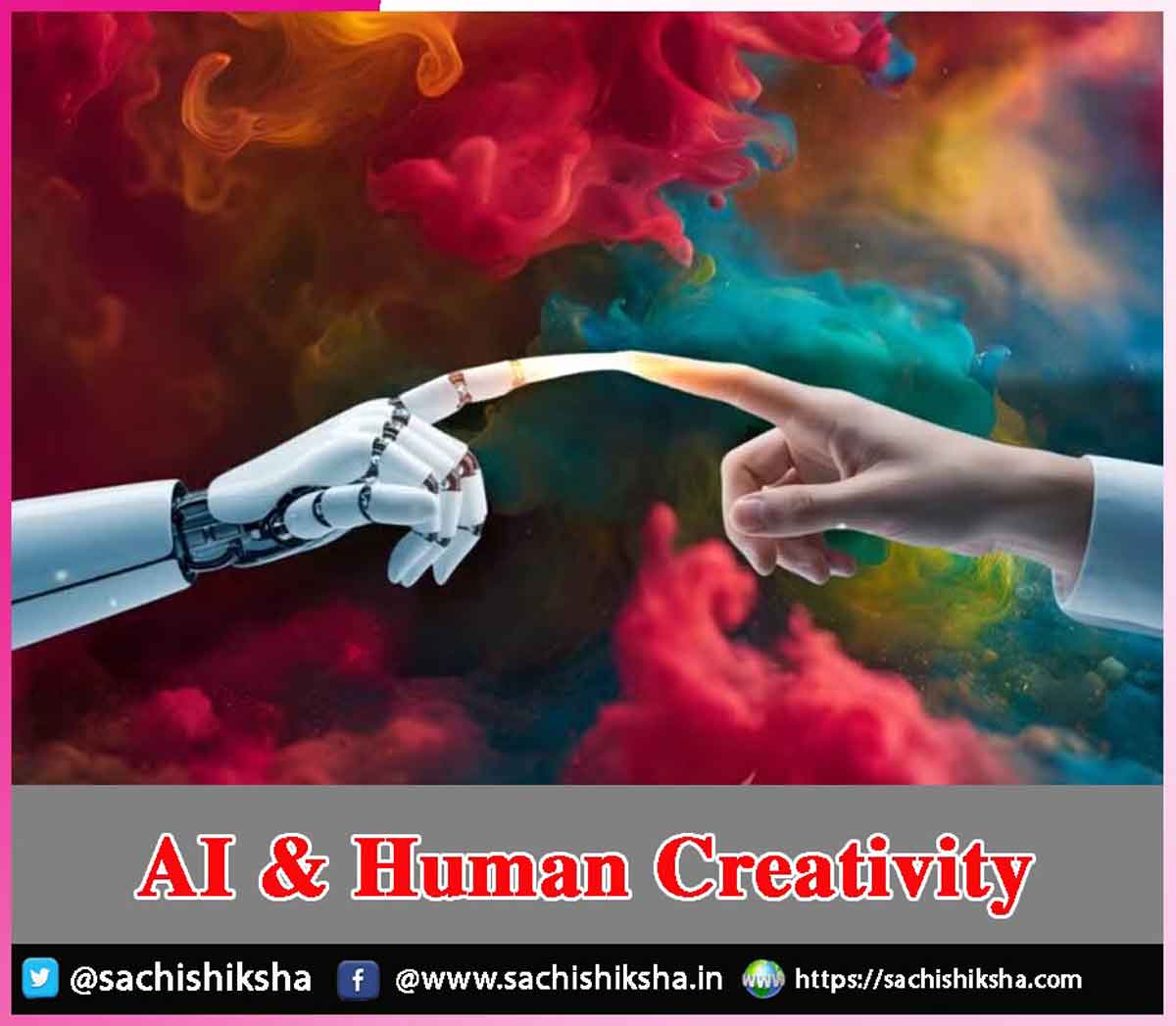
AI & Human Creativity
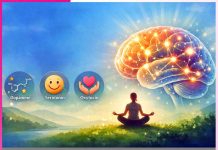
Introduction: The relationship between artificial intelligence and human creativity is one of the most fascinating conversations of the modern era. For centuries, creativity has been seen as a uniquely human trait—rooted in emotion, imagination, and lived experience. With the rise of AI systems capable of writing, composing music, generating art, and designing solutions, this belief is now being questioned. Yet rather than replacing human creativity, AI is reshaping how it is expressed, expanded, and supported.
Table of Contents
Human Creativity vs Artificial Intelligence
Human creativity begins with intent, emotion, and meaning. Artists, writers, designers, and innovators draw inspiration from personal experiences, cultural contexts, and emotional depth. AI, on the other hand, operates through data, patterns, and algorithms. It does not “feel” or “imagine” in the human sense. Instead, it analyses vast amounts of information and generates outputs based on learned structures. This fundamental difference highlights an important truth: AI is not a creative being, but a creative tool.
Enhancing Creativity Through Automation
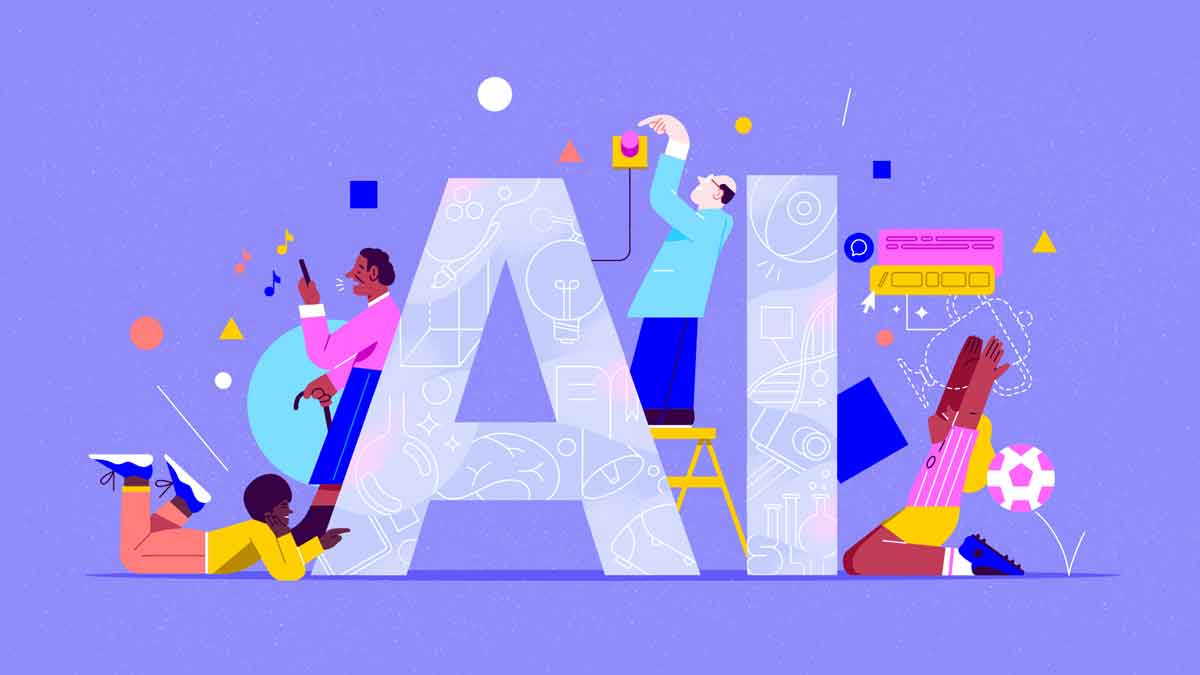 One of the most powerful ways AI enhances human creativity is by removing limitations. Creative work often involves repetitive or time-consuming tasks—editing, formatting, researching, or testing variations. AI can automate these processes, allowing humans to focus more on ideation and storytelling. For example, designers can use AI to generate multiple concept drafts in seconds, writers can explore alternative narratives, and musicians can experiment with new sounds. This acceleration opens up space for deeper exploration and refinement.
AI as a Creative Collaborator
AI also acts as a collaborator rather than a competitor. When humans interact with AI systems, they engage in a feedback loop—prompting, evaluating, refining, and reimagining. This interaction can spark ideas that may not have emerged independently. By offering unexpected combinations or perspectives, AI can push creators beyond familiar patterns and creative blocks. In this sense, AI becomes a catalyst for innovation rather than its source.
Originality, Authorship, and Authenticity
However, the presence of AI in creative fields also raises important questions. Concerns around originality, authorship, and authenticity are central to the debate. If an AI generates a painting or a poem, who owns the creative credit? More importantly, does creativity lose its value when it can be produced at scale? These questions remind us that creativity is not just about output, but about intention, context, and impact. Human creativity carries meaning because it reflects human thought, struggle, and expression—elements AI cannot replicate.
Accessibility and the Democratization of Creativity
Another key dimension of AI and creativity is accessibility. AI tools have lowered entry barriers for creative expression. People without formal training can now write stories, design visuals, or produce music using AI-assisted platforms. This democratization of creativity empowers more voices to be heard and encourages experimentation. At the same time, it challenges traditional definitions of skill and expertise, pushing creative communities to redefine what originality and mastery mean in the age of AI.
Ethical Responsibility in Creative AI
Ethical responsibility also plays a crucial role in this relationship. Humans decide how AI is trained, used, and integrated into creative processes. Bias in data, misuse of generated content, and over-reliance on automation can weaken creative integrity. Therefore, human judgement, values, and accountability remain essential. Creativity guided by ethics ensures that AI enhances expression without overshadowing human purpose.
Collaboration as the Future of Creativity
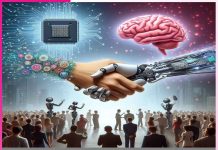
Ultimately, AI and human creativity are not opposing forces; they are complementary. AI brings speed, scale, and analytical power, while humans bring vision, emotion, and meaning. The future of creativity lies in collaboration—where humans lead with imagination and values, and AI supports with tools and possibilities.
Conclusion
AI is transforming the creative landscape, not by replacing human creativity, but by expanding its reach. When used thoughtfully, AI becomes a partner that amplifies human potential. The true power of creativity will always lie in the human ability to imagine, feel, and create with purpose—guided, not replaced, by intelligent technology.