























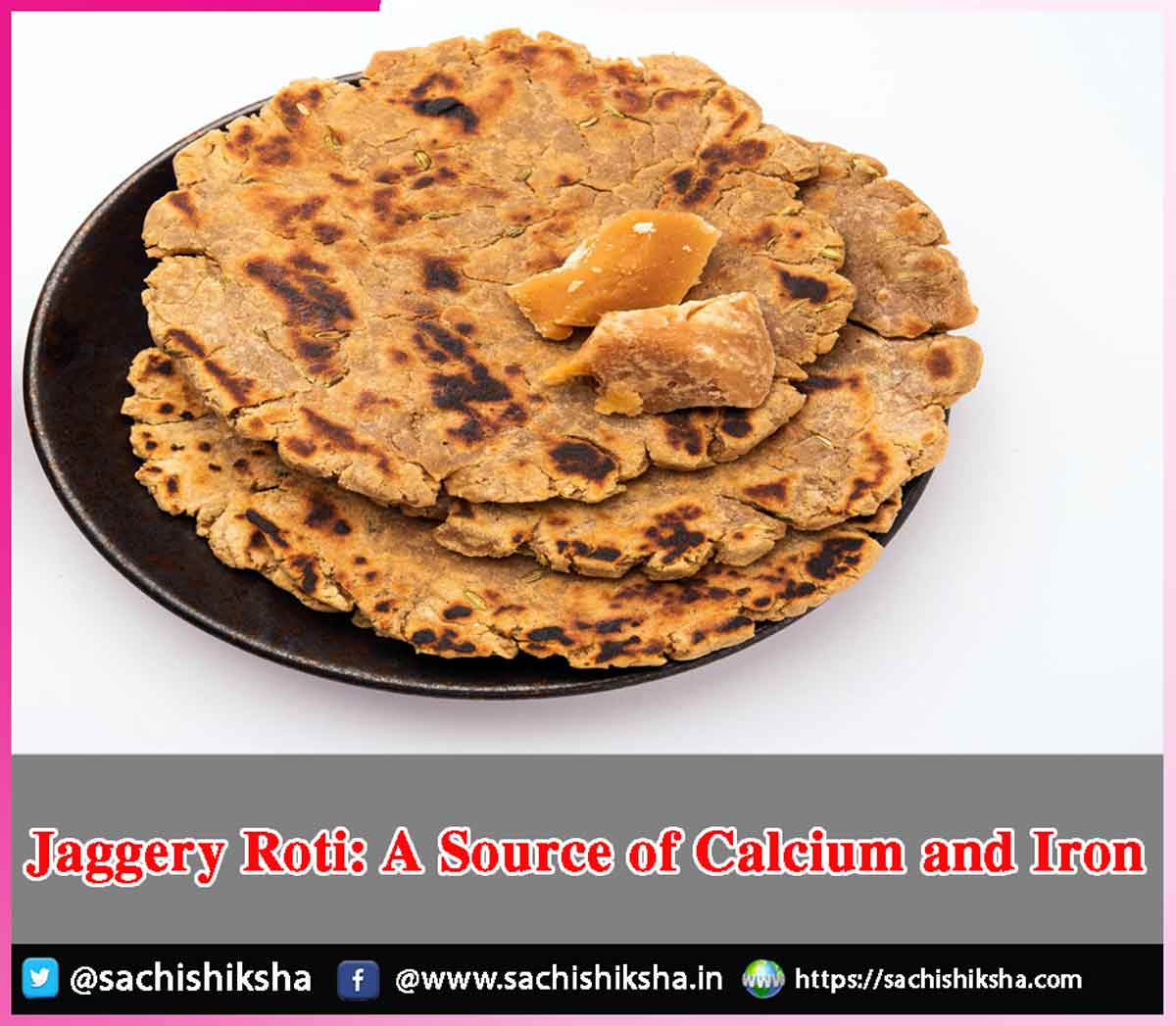
Jaggery Roti: A Source of Calcium and Iron
Introduction: Winter brings a significant change in our eating habits. We try to keep our bodies warm, both internally and externally, while adjusting to the cold weather. Eating jaggery roti is a good idea during this season. Many people enjoy jaggery with their meals; however, it can also be prepared in the form of roti. In many parts of the country, jaggery roti is especially popular in winter. It provides warmth and nutrition, and it tastes equally good.
Table of Contents
Works as a Natural Sweetener
 During the winter months, our cravings for sweets increase significantly. As a result, we often consume refined sugar, which is considered unhealthy. Instead, jaggery roti can be a healthier alternative. Jaggery is a natural sweetener and a much better option than refined sugar. Consuming it does not lead to weight gain when eaten in moderation.
Provides Warmth
One of the advantages of jaggery roti is that, apart from being sweet, it also provides warmth to the body. Jaggery is known to generate heat within the body. Therefore, eating jaggery roti during winter can make you feel more comfortable and energetic.
Chases Away Fatigue
Many people suffer from severe colds or seasonal affective disorder during the winter months. This may lead to fatigue, mood swings, and other symptoms. However, eating jaggery roti can help manage these issues, as jaggery is a good source of iron. It helps maintain haemoglobin levels and may protect against colds, thereby reducing tiredness and weakness.
Improves Bone Health
Eating jaggery roti also has significant benefits for bone health. Jaggery contains minerals such as magnesium, potassium, and calcium. All of these minerals are essential for maintaining strong and healthy bones. Therefore, regular consumption of jaggery roti can contribute to better bone strength.
Benefits the Immune System
Incorporating jaggery roti into your winter diet can have a positive effect on the immune system. During the cold months, immunity often weakens, making people more vulnerable to seasonal illnesses. Jaggery contains important vitamins and minerals, such as zinc and selenium, which support immune function. When consumed in the form of jaggery roti, it greatly benefits the immune system.