

























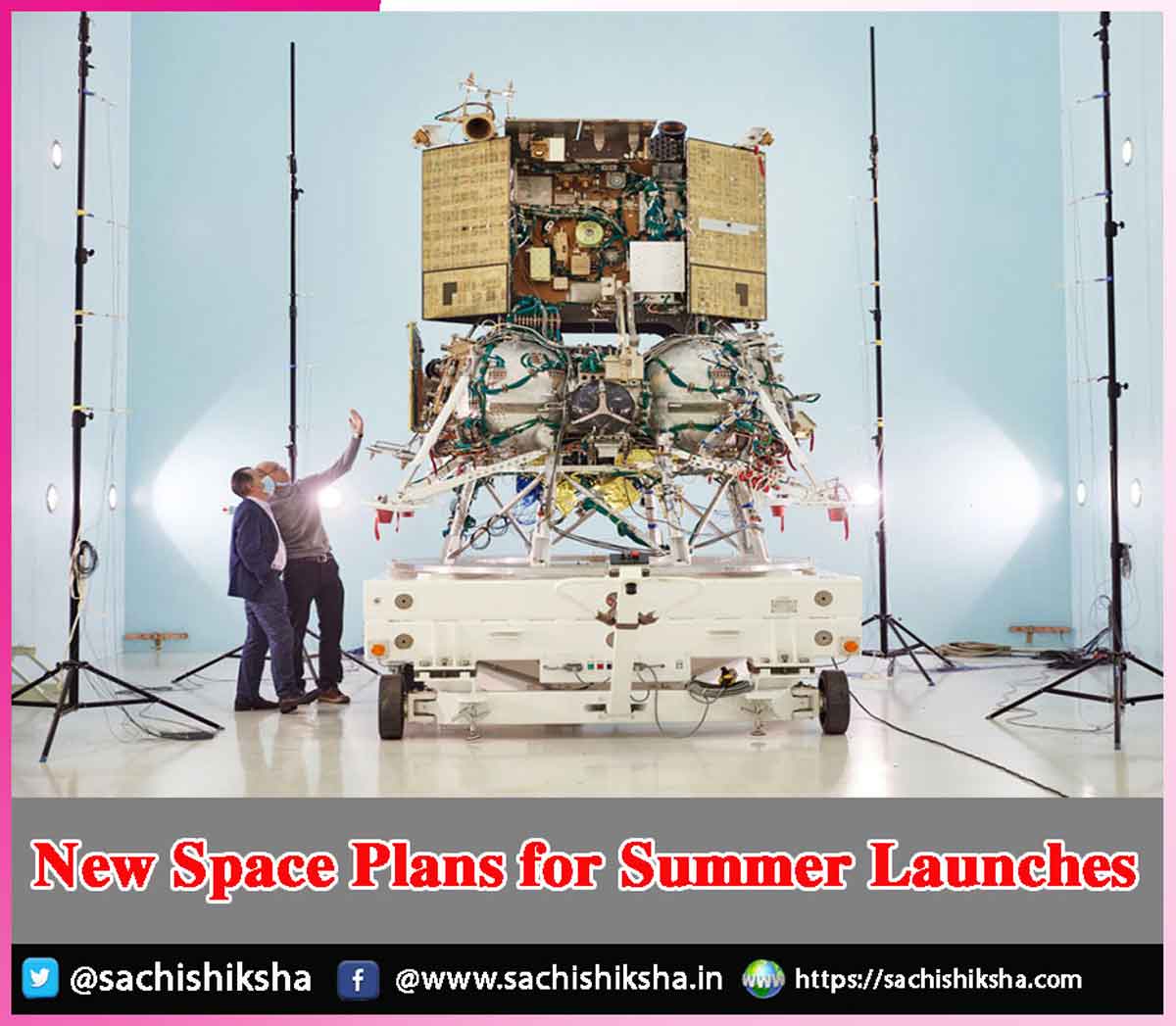
New Space Plans for Summer Launches
Introduction: Summer has always been associated with travel, adventure, and exploration. But in recent years, another kind of launch season has started dominating global attention — space launches. From lunar missions and satellite deployments to reusable rockets and private aerospace innovations, the coming summer is shaping up to be one of the most ambitious periods for the space industry yet.
The new space plans for summer launches are not just about rockets leaving Earth. They represent a larger shift in how governments, private companies, and global industries now view space — not as a distant scientific dream, but as an active economic and technological frontier.
Table of Contents
Space Launches Becoming a Global Focus
Agencies and companies across the world are preparing for a packed launch calendar. Missions connected to lunar exploration, satellite expansion, cargo transport, and deep-space research are moving from planning stages into execution. NASA’s broader Artemis road map, commercial lunar payload programmes, and next-generation launch systems are all contributing to a renewed global space race.
What makes this summer particularly important is the growing balance between public space agencies and private aerospace companies. Earlier, space exploration was almost entirely government-led. Today, companies such as SpaceX and Blue Origin are playing a major role in shaping launch schedules, transportation systems, and lunar mission strategies.
The Growing Importance of Lunar Missions
One of the biggest areas of focus remains the Moon. Lunar missions are becoming central to long-term exploration plans because the Moon is now seen as a testing ground for future Mars missions and deep-space infrastructure.
NASA’s Artemis-related planning continues to evolve, with future missions focusing on orbital testing, docking systems, and eventually sustained lunar operations. Scientists and engineers believe that successful lunar missions could lay the foundation for long-duration human presence beyond Earth.
Commercial Satellites and Expanding Orbital Activity
At the same time, commercial satellite launches are accelerating rapidly. Global demand for internet connectivity, Earth observation, climate monitoring, defence systems, and navigation technologies is driving constant launch activity.
Industry observers now describe 2026 as one of the busiest years in spaceflight history, with hundreds of orbital launches projected worldwide. Private satellite networks are becoming increasingly important for communication, disaster management, agriculture, and scientific research.
Reusable Rockets Changing the Industry
The rise of reusable rockets is also changing how launch seasons are planned. Earlier, launches were rare, expensive, and limited. Today, reusable systems have reduced turnaround times and increased launch frequency dramatically.
This operational efficiency is allowing companies to plan multiple launches within shorter windows, making summer launch periods more crowded and commercially viable. Reusable rocket technology is also lowering costs and encouraging more countries and companies to participate in space activities.
Rising International Participation in Space Programmes
Another major shift is the increasing international participation in space programmes. Countries that once relied entirely on larger agencies are now building independent capabilities.
Europe, Japan, India, and emerging private players are investing heavily in launch systems, lunar technologies, and scientific payloads. Indian Space Research Organization continues to expand India’s presence in global space exploration through satellite missions, launch vehicles, and lunar research initiatives.
Space is no longer dominated by a few nations. It is becoming a globally competitive ecosystem.
Space Launches as Public and Cultural Events
Public interest in space launches is also reaching new levels. Major missions now attract tourism, live stream audiences, and large-scale digital engagement. Recent Artemis mission activity drew hundreds of thousands of visitors to Florida’s Space Coast alone, highlighting how space launches are becoming cultural events in addition to scientific milestones.
Social media coverage, live broadcasts, and educational programmes are helping ordinary people follow missions in real time, making space exploration more accessible and exciting for global audiences.
Challenges Behind the Ambition
Behind the excitement, however, there is also intense pressure. Launch timelines continue to shift because of technical testing, safety reviews, and engineering challenges.
Discussions within the space community show that while ambitions are growing rapidly, timelines remain fluid. Lunar landing schedules, spacecraft readiness, and orbital testing plans continue to evolve as agencies prioritise reliability and long-term sustainability.
The complexity of modern missions means that even small technical issues can lead to delays. However, experts believe that careful testing remains essential for the future success of long-term space exploration.
Conclusion
Still, the momentum is undeniable.
The new space plans for summer launches represent more than seasonal activity. They reflect a world entering a new era of exploration — one where space becomes part of economic growth, technological leadership, scientific discovery, and even mainstream culture.
This summer, rockets will carry more than satellites and spacecraft into orbit.
They will carry the ambitions of a planet preparing for its next frontier.