























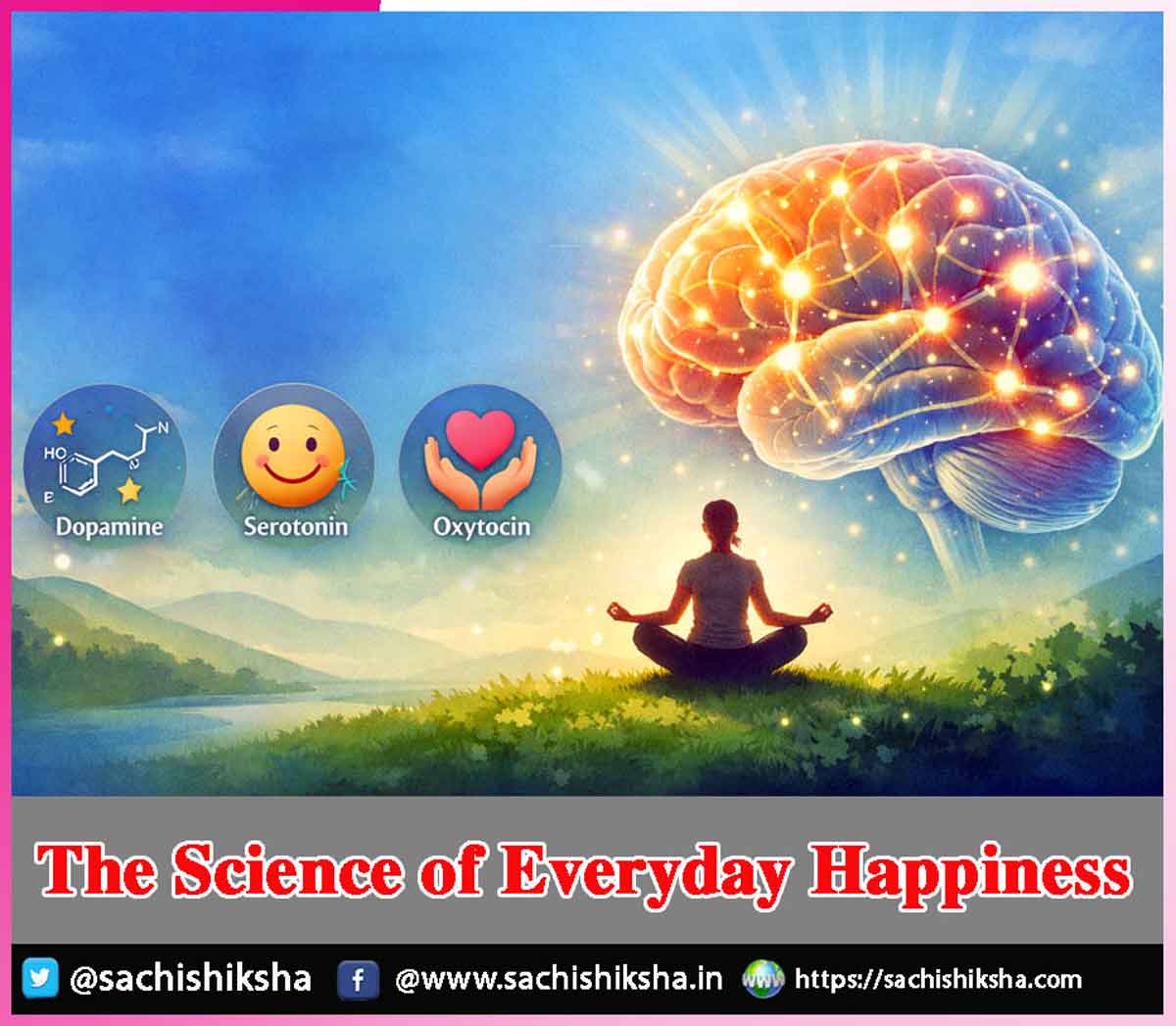
The Science of Everyday Happiness
Introduction: Most people carry one simple wish: to live peacefully and happily. For many people today, across different parts of India, blessings often emphasize happiness, peace, and well-being rather than material success. In Hindi-speaking regions, elders commonly say, “Khush raho” or “Sukhi raho.” The desire for a calm and meaningful life often stands above wealth or status.
Table of Contents
What Psychology Says About Happiness
Modern psychology arrives at a similar conclusion. Researchers argue that happiness is not simply the result of luck, personality, or favourable circumstances. While genetics and life situations play a role, everyday habits and choices also influence emotional well-being. Gratitude, kindness, mindfulness, and supportive relationships gradually strengthen resilience and improve life satisfaction.
Healthy Habits and the Brain
Regular physical activity, sufficient sleep, and moments of relaxation or mindful breathing are associated with improved mood and lower stress. Happiness, therefore, is not only an emotion but also something supported by healthy routines.
Scientists also describe neuroplasticity, the brain’s ability to adapt through repeated experiences and behaviours. In simple terms, the patterns we practise most often become easier for the brain to repeat. Noticing positive moments, appreciating others, or spending less time on screens may seem insignificant individually, but over time these habits influence how people interpret everyday experiences.
The Importance of Relationships and Meaning
Research suggests that happiness rarely grows in isolation. Close friendships, supportive family relationships, and contributing to something larger than oneself predict well-being more reliably than wealth or social status alone. Psychologist Martin Seligman emphasized the importance of meaning, purpose, and human connection.
Indian ideas about happiness add another dimension to this understanding. Ancient traditions valued contentment, inner harmony, and peace of mind more than excitement or constant pleasure. Happiness was seen less as a temporary emotion and more as a balanced way of living that could exist even during difficult times.
Why Success Alone Is Not Enough
This perspective may explain why many successful people continue to feel dissatisfied even after reaching visible milestones. Promotions, expensive gadgets, and public approval create pleasure, but pleasure is often temporary. Once one goal is achieved, the mind adjusts and begins searching for the next one.
In recent years, there has been growing interest in gratitude journals, digital detox routines, and kindness challenges. Their popularity reflects an important lesson from behavioural science: lasting happiness usually grows from repeated habits rather than dramatic life changes.
Journaling and Self-Awareness
Researchers studying happiness frequently recommend journalling for a similar reason. Writing down experiences helps people identify emotional patterns that usually go unnoticed. Psychologist Robert Emmons found that regularly recording positive experiences and moments of appreciation can strengthen optimism and improve life satisfaction. In this way, self-awareness becomes practical knowledge rather than a vague feeling.
A Global Focus on Well-Being
The growing recognition of happiness research is reflected in the International Day of Happiness, observed on 20 March, as established by the UN General Assembly in 2012. Conversations about well-being have moved beyond academic research into schools, workplaces, podcasts, and public discussions.
Conclusion
Perhaps that is the real beauty of the science of everyday happiness. It does not ask people to chase extraordinary lives. Instead, it encourages them to notice ordinary moments more carefully and live them more fully. In many ways, this brings us back to an old human hope: not merely to succeed, but to remain happy, peaceful, and content throughout life.