




















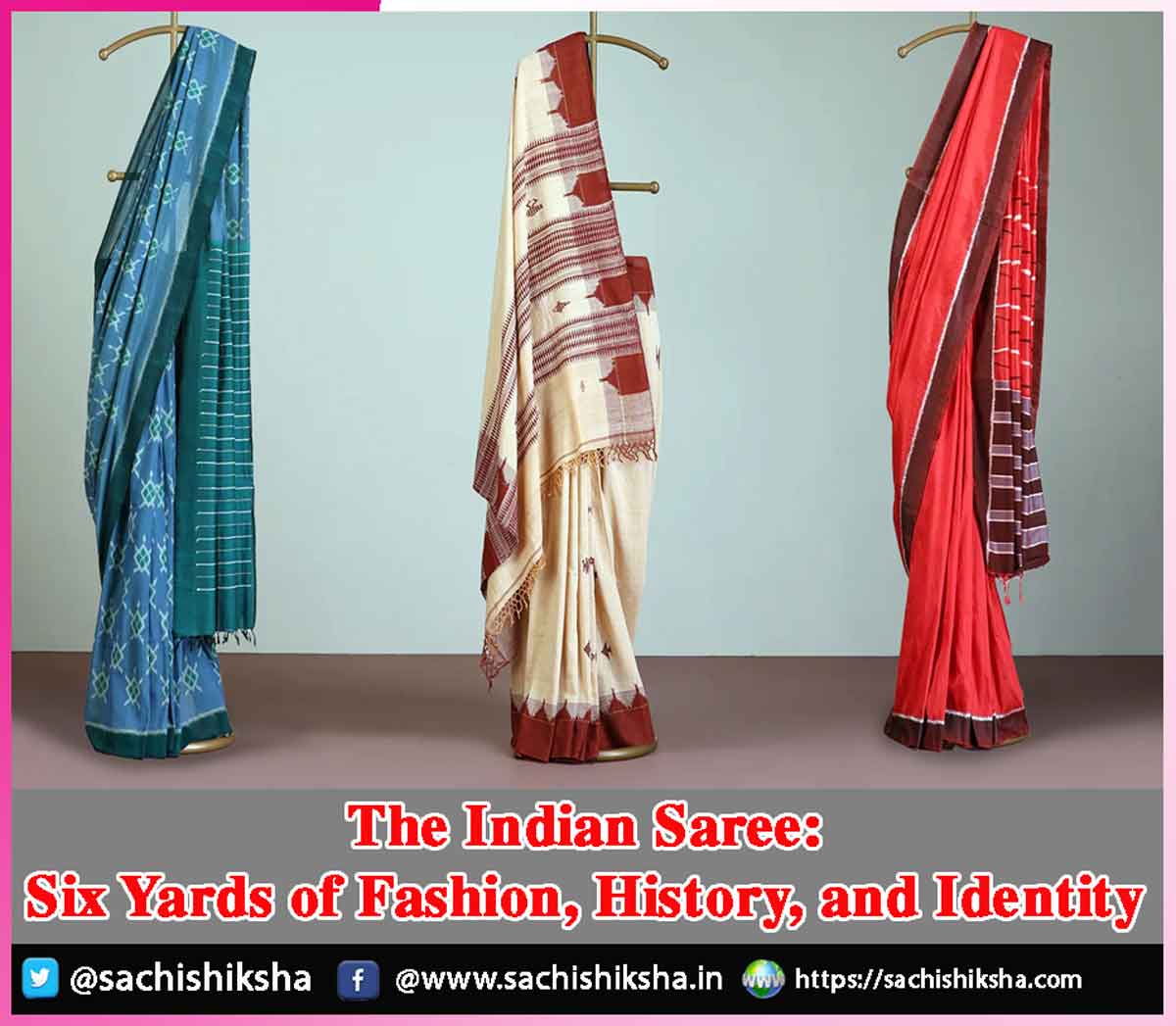
The Indian Saree: Six Yards of Fashion, History, and Identity
Introduction: A Garment Beyond Occasions Think of a saree, and many picture their mothers and grandmothers wearing it with grace and pride. For others, it is reserved for the splendour of festivals, ethnic days, social media stories, or celebrations like the nine days of Navratri. Yet, beyond these associations, the saree connects generations, regional traditions, and personal identities.
Table of Contents
Historical Roots and Cultural Expression
The Indian saree is not merely an outfit; it is a form of cultural expression shaped by centuries of craftsmanship, regional diversity, and changing lifestyles. Typically made from an unstitched length of fabric, it varies widely in material, pattern, length, and draping style. Its legacy lies in preserving traditions while adapting to modern fashion. Archaeological evidence suggests that draped garments have existed in the Indian subcontinent since the Indus Valley Civilization.
Regional Diversity and Textile Heritage
The regional diversity of the saree and its drape styles is reflected across India’s textile heritage. Banarasi silk from Varanasi, Kanchipuram silk from Tamil Nadu, Chanderi textiles from Madhya Pradesh, and Bengal’s cotton sarees represent distinct materials, techniques, and aesthetic choices. These traditions connect clothing with indigenous knowledge, skilled labour, and community practices. In her book, Saris: An Illustrated Guide to the Indian Art of Draping, Chantal Boulanger examines this rich diversity, emphasizing how the garment has developed into numerous regional styles.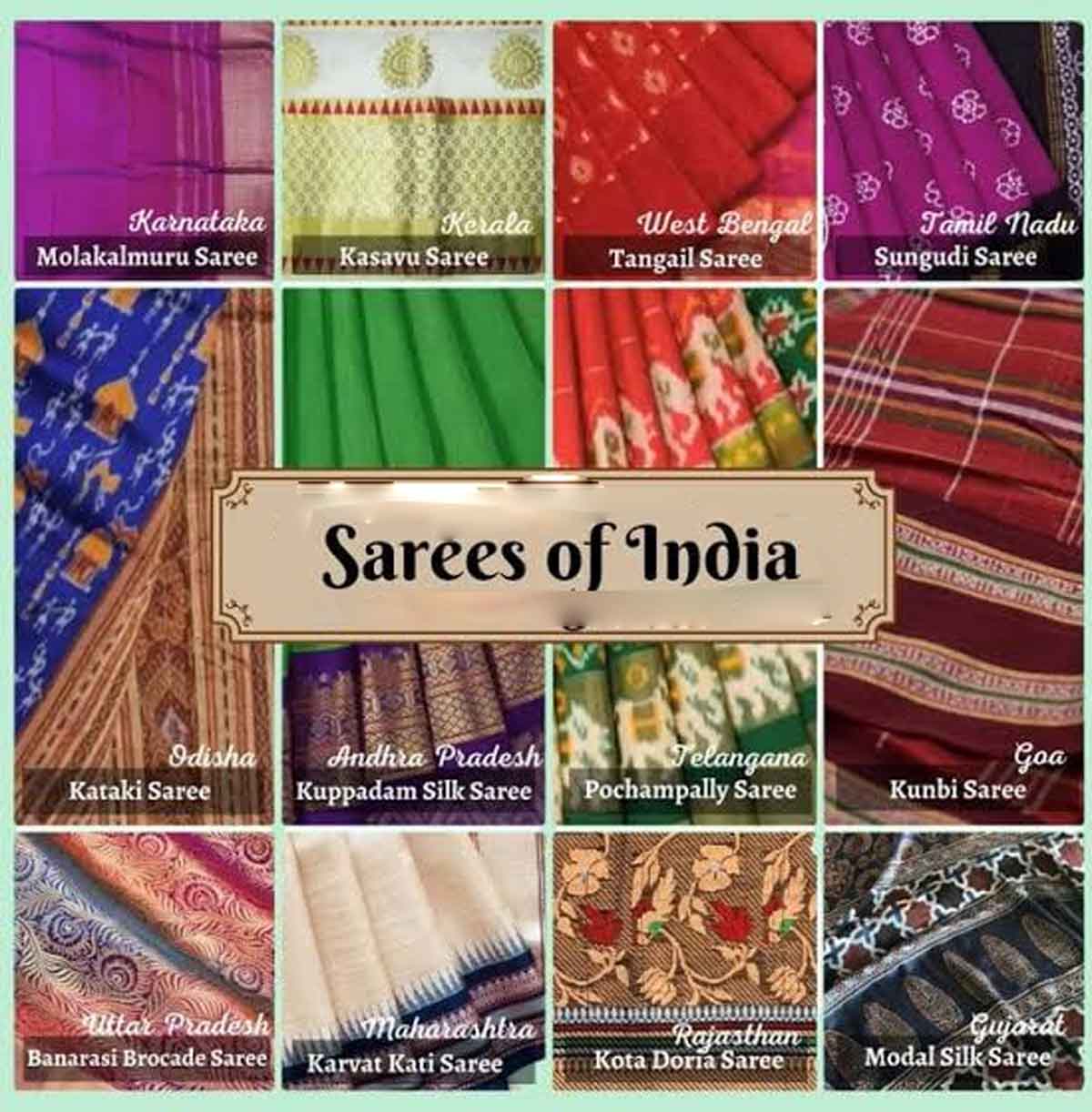
Supporting Local Craft Economies
Traditional handloom weaving has long supported local textile production and rural economies. Localities such as Kondalampatti in Salem, Tamil Nadu, are widely known for their silk sarees and specialized weaving techniques. Preserving these traditional textiles directly sustains the skills, livelihoods, and local industries behind them.
Evolution Through History and Modernity
The saree has continually evolved through historical shifts, including colonial-era dress conventions, industrial production, cinema, and contemporary fashion. Modern blouse designs, new fabrics, and pre-stitched ready-to-wear versions highlight its adaptability. In their 2023 study, Bhavin Patel and Aparna Vajpayee observe that saree illustrations reflect broader socio-economic changes through shifts in patterns, motifs, and decorative techniques—ranging from nationalist expressions to modern digital design. These adaptations show how the saree’s visual language evolves while maintaining its connection to traditional roots.
Beyond the Six Yards: India’s Broader Textile Landscape
Today, designers and wearers constantly reinterpret the saree using different drapes, new fabrics, and unconventional pairings. However, its future depends on sustaining traditional weaving skills and recognizing the artisans whose labour gives these textiles their value.
At the same time, these six yards of fabric do not represent every Indian woman’s experience or the nation’s entire cultural landscape. India’s textile heritage extends well beyond the saree to many other traditional garments, such as Assam’s mekhela chador or Meghalaya’s jainsem, worn by Khasi women. Across India, woven fabrics, colours, patterns, and draping styles reflect distinct regional histories and community identities. While not all are sarees, they share the same deep significance as expressions of cultural belonging.
Conclusion
Weaving the Past into the Future Ultimately, the Indian saree remains a remarkable example of how clothing can unite history, craftsmanship, and identity. Its true legacy lies in its ability to carry the past into the present—preserving time-honoured stories and skills while leaving room for future generations to add to its story.