





















Water Scarcity in May
Introduction: As temperatures rise across many parts of the world, especially in countries like India, the month of May often brings with it an intense and visible crisis—water scarcity. With scorching heat, drying rivers, and increasing demand for water, May becomes a critical period that highlights the fragile balance between human needs and natural resources.
Table of Contents
Causes of Water Scarcity
Peak Summer Heat
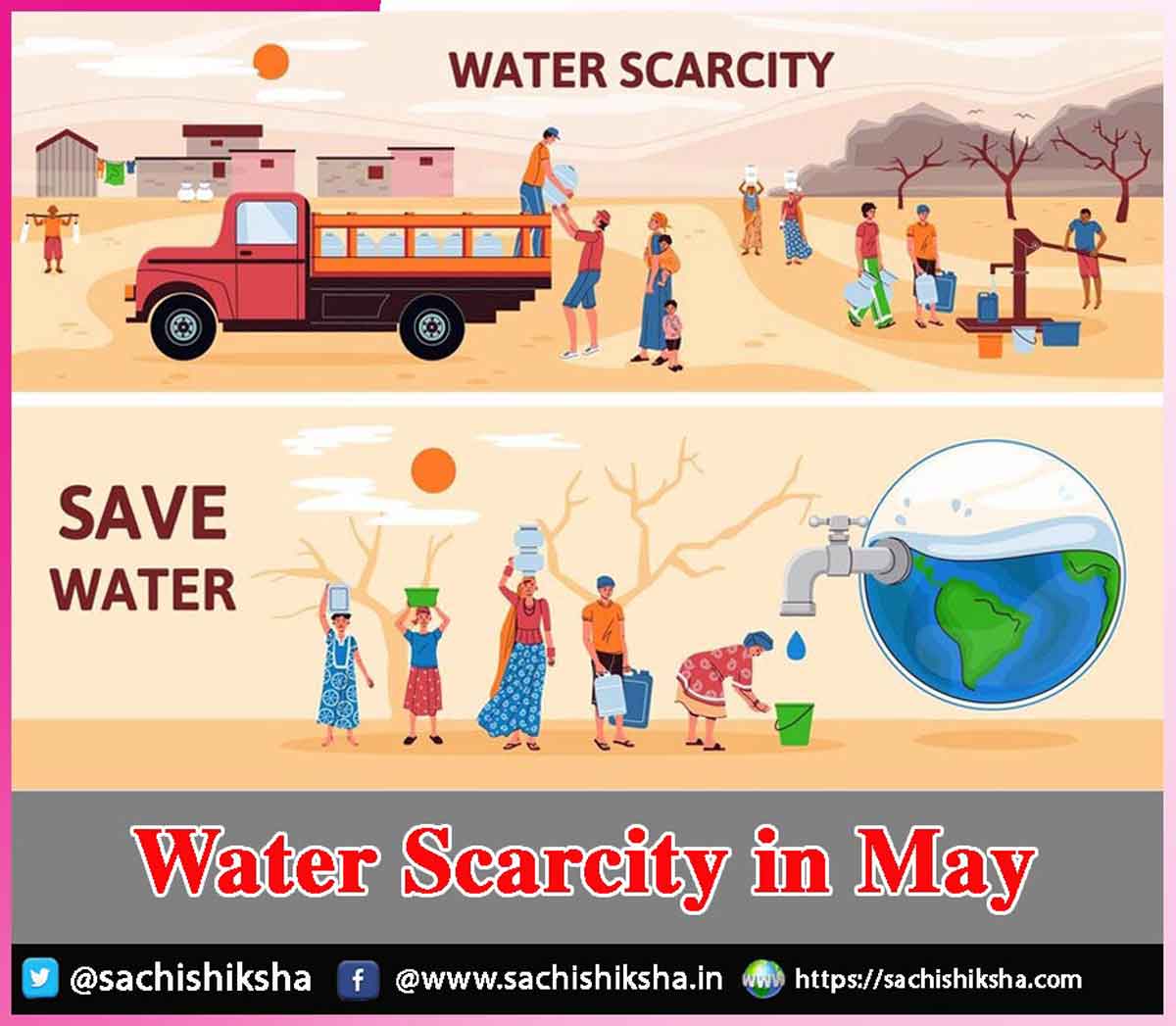
One of the primary reasons for water scarcity in May is the peak summer season. During this time, temperatures often rise above 40°C in many regions, leading to rapid evaporation of water from lakes, ponds, and reservoirs. Groundwater levels also decline because of excessive extraction for drinking, irrigation, and industrial purposes. In rural areas, hand pumps and wells frequently dry up, forcing people to travel long distances in search of water.
Delayed Arrival of the Monsoon
Another contributing factor is the delayed arrival of the monsoon. In countries dependent on seasonal rainfall, such as India, the gap between the end of winter rains and the onset of the monsoon creates a long dry spell. By May, the water stored from previous months is nearly exhausted, and without fresh rainfall, the situation becomes increasingly severe.
Rapid Urbanisation
Urban areas are also affected by this crisis. Rapid population growth and unplanned urbanisation have increased water demand in cities. During May, many cities face water cuts, reduced supply, and dependence on water tankers. The overuse of groundwater in urban regions further worsens the problem because recharge rates cannot keep pace with extraction.
Impact on Agriculture and Rural Life
Agriculture, which consumes a significant portion of available freshwater, suffers greatly during this period. Farmers struggle to irrigate their crops, leading to reduced yields and financial losses. In extreme cases, crop failure may occur, affecting food supply and increasing economic stress on rural communities. Livestock also face water shortages, adding to the burden on farmers.
Climate Change and Water Scarcity
Climate change has intensified water scarcity in recent years. Unpredictable weather patterns, reduced rainfall, and an increased frequency of heat waves have made water availability more uncertain. As a result, many regions experience longer and harsher dry periods.
Effects on Human Life
Water scarcity affects health, sanitation, education, and overall quality of life. In many communities, especially among women and children, a significant amount of time is spent fetching water, reducing opportunities for education and employment. Lack of clean water also increases the risk of waterborne diseases and poor hygiene.
Solutions and Preventive Measures
Water Conservation
Addressing water scarcity requires both short-term and long-term solutions. Immediate measures include reducing water wastage, repairing leaks, and using water-efficient appliances in homes and industries.
Rainwater Harvesting
Rainwater harvesting is another effective solution. It helps store rainwater during the monsoon season for use during dry months and also supports groundwater recharge.
Sustainable Water Management
Governments and local authorities must invest in better water management systems, including reservoirs, pipelines, and treatment facilities. Efficient irrigation methods such as drip irrigation should be promoted to reduce water consumption in agriculture.
Public Awareness and Community Participation
Public awareness and community participation are equally important. Collective efforts to protect natural water sources and use water responsibly can lead to long-lasting improvements.
Conclusion
Water scarcity in May is not merely a seasonal problem but a reflection of deeper environmental and management challenges. As the demand for water continues to grow, it is essential to adopt responsible and sustainable practices to ensure that this vital resource remains available for future generations