


























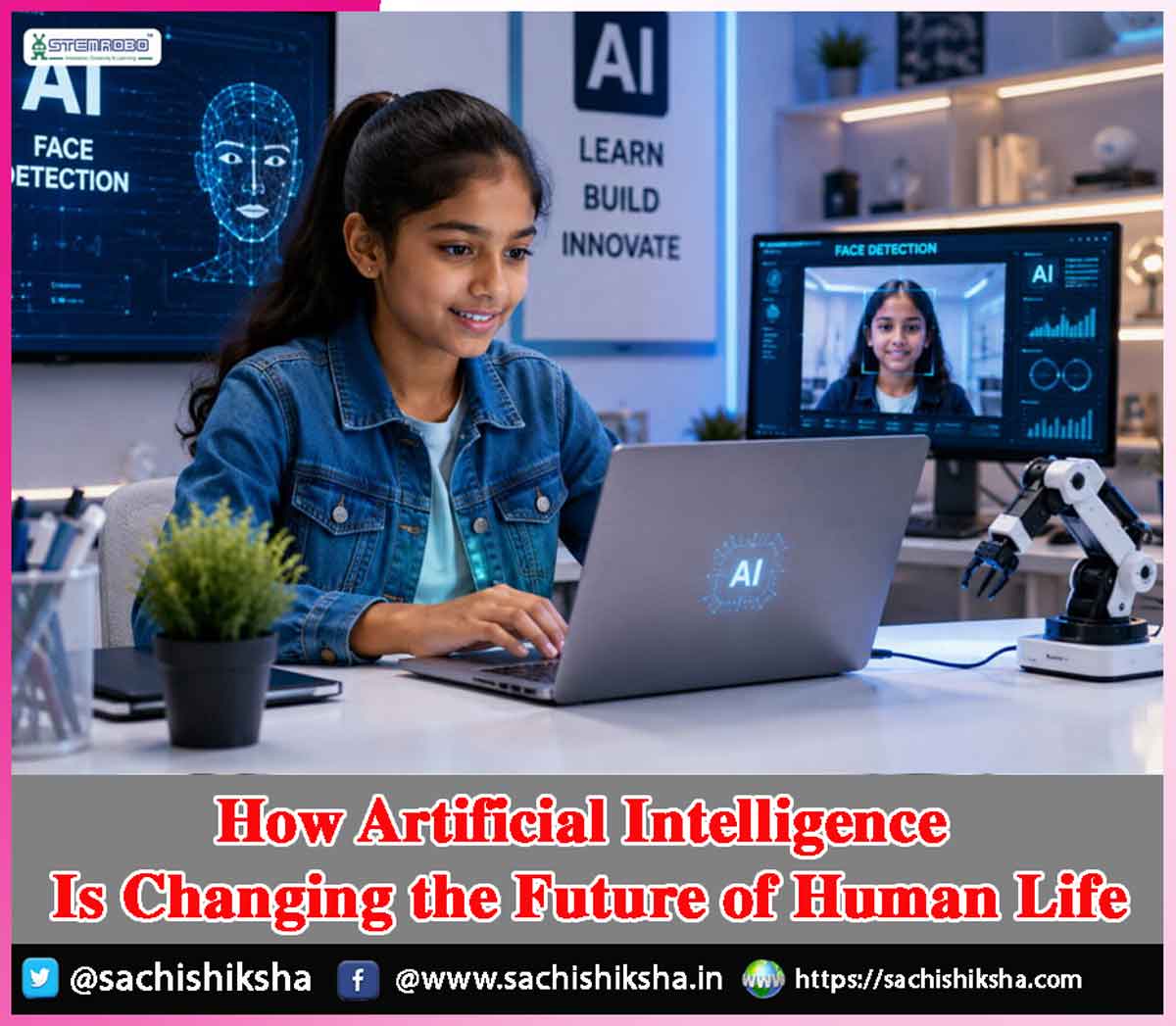
How Artificial Intelligence Is Changing the Future of Human Life
Introduction: Artificial Intelligence (AI) is no longer a concept limited to science fiction or advanced technology laboratories. It has become an integral part of everyday life, influencing how people work, communicate, learn, travel and make decisions. From voice assistants and personalised recommendations to advanced medical systems and self-driving vehicles, AI is transforming the way humans interact with the world. As technology continues to evolve, its influence is expected to reshape almost every aspect of human life.
Table of Contents
Transforming Everyday Life
One of the most noticeable impacts of AI is the convenience it brings to everyday activities. Virtual assistants, smart home devices and AI-powered applications help people manage their daily routines more efficiently. From suggesting the fastest travel routes to recommending movies, managing schedules and translating languages, AI simplifies tasks that once required considerable time and effort.
Smart devices can also learn user preferences and provide personalised experiences. These developments are gradually making technology more responsive to human needs, creating a lifestyle where everyday activities become increasingly connected and automated.
Reshaping Education and Learning
AI is bringing significant changes to the education sector by making learning more personalised and accessible. Traditional teaching methods generally follow a common learning pace, whereas AI-powered platforms can adapt to individual students’ abilities, interests and progress.
Students can use AI tools to understand complex subjects, practise new languages and receive instant feedback. Teachers can also use these technologies to prepare learning materials, track academic performance and identify areas where students need additional support.
However, AI is intended to support education rather than replace the role of teachers. Human interaction, creativity, critical thinking and emotional guidance remain essential to effective learning.
Revolutionising Healthcare
Healthcare is another sector experiencing remarkable advancements through AI. Medical professionals are increasingly using AI-powered systems to analyse medical images, identify potential health risks and support early disease detection.
AI can process large volumes of medical data in a short period, helping doctors make more informed decisions. It also supports the development of personalised treatment plans based on individual patient information.
In addition, AI-powered wearable devices can monitor physical activity, heart rate and sleep patterns, encouraging people to become more aware of their health. While these technologies offer promising possibilities, medical decisions must continue to involve qualified healthcare professionals.
Changing the Future of Work
AI is redefining workplaces by automating repetitive tasks and improving operational efficiency. Industries such as manufacturing, banking, retail, construction and transportation are adopting AI-powered systems to streamline processes, analyse information and reduce manual effort.
Employees can use AI tools to prepare reports, organise data, generate ideas and manage routine responsibilities. This allows them to focus more on strategic thinking, problem-solving and creative work.
At the same time, automation may change certain job roles and create new skill requirements. Some traditional tasks may become less relevant, while opportunities emerge in areas such as data analytics, AI development, cybersecurity and automation management. Therefore, continuous learning and adaptability will become increasingly important for the future workforce.
Making Transportation and Cities Smarter
AI is also contributing to the development of smarter transportation systems and urban infrastructure. Intelligent traffic management systems can analyse traffic patterns and help reduce congestion. Navigation applications use real-time information to suggest efficient routes, while advanced driver-assistance systems improve road safety.
In the future, autonomous vehicles, smart energy networks and AI-enabled infrastructure could make cities more efficient and sustainable. These developments have the potential to improve mobility, resource management and the overall quality of urban life.
Challenges and Human Responsibility
Despite its advantages, the growing influence of AI raises important concerns. Data privacy, cybersecurity, misinformation, algorithmic bias and job displacement are some of the challenges that require careful attention.
Overdependence on AI may also affect human decision-making and problem-solving abilities. Furthermore, AI systems can produce inaccurate information, making human verification essential.
Responsible development and usage are therefore necessary. Governments, organisations and technology developers must establish appropriate guidelines to ensure that AI remains transparent, secure, fair and beneficial to society.
A Future Shaped by Human Intelligence and AI
Artificial Intelligence is not simply changing the way people use technology; it is changing how society functions. Its ability to process information, identify patterns and perform complex tasks offers enormous possibilities for human progress.
However, technology alone cannot define a better future. Human values, empathy, creativity, ethics and judgement will continue to play a crucial role in shaping society. The real potential of AI lies not in replacing human intelligence but in complementing it.
As we move towards an increasingly technology-driven world, the focus should be on learning to work alongside AI. The future will belong to those who can combine the capabilities of artificial intelligence with the unique qualities of human intelligence to create a more connected, productive and sustainable world.