
























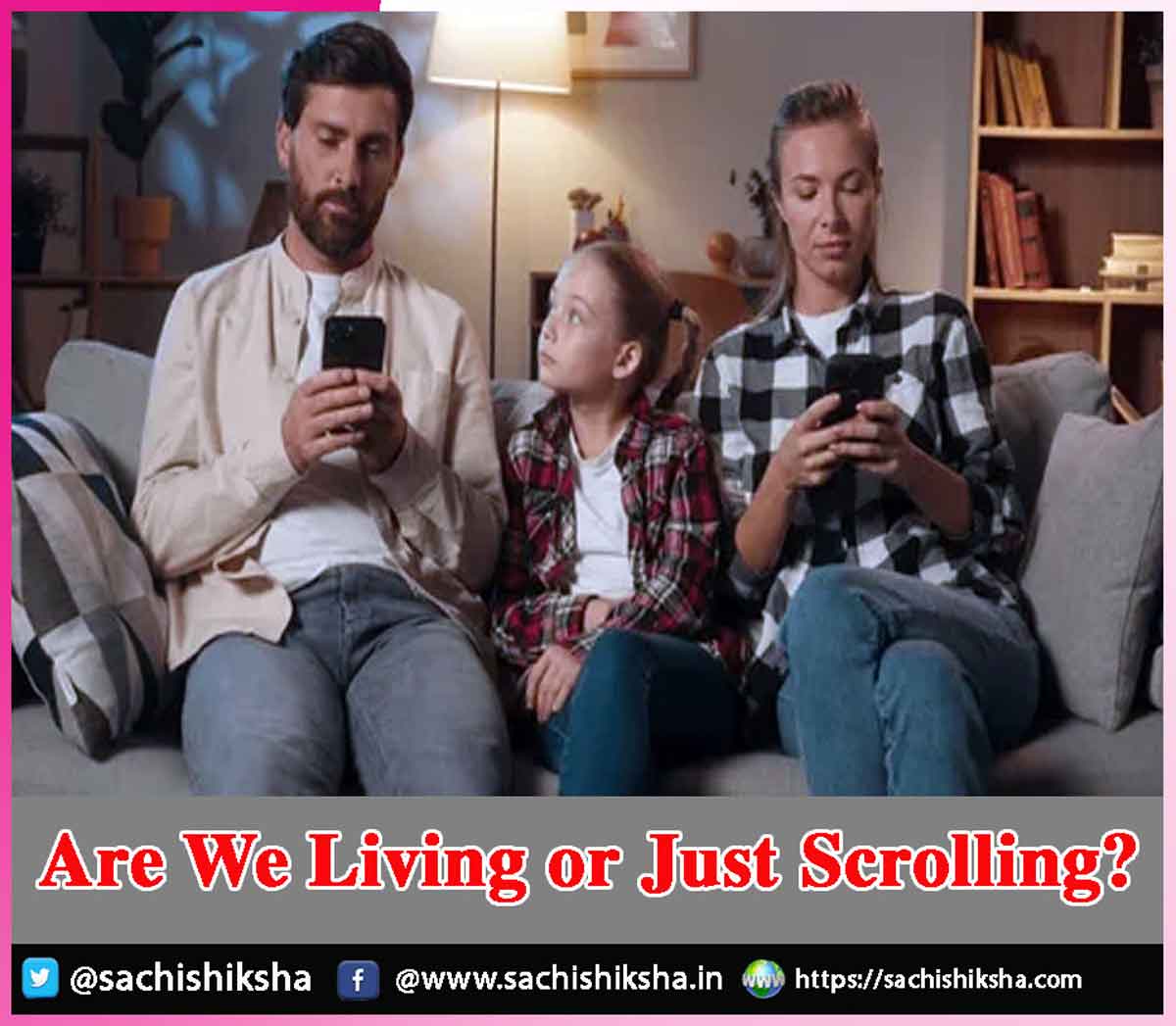
Are We Living or Just Scrolling?
Introduction: Nomophobia, the fear of being without a mobile phone, is no longer just a fancy term; it has quietly become a way of life. Most people now wake up and check notifications, messages, and reels before even brushing their teeth. Instagram takes up hours, YouTube fills the quiet spaces, and scrolling has become as natural as breathing. Screen-time reports shock us for a moment, but after a while, the cycle begins again.
Table of Contents
When Technology Starts Controlling Us
Technology was created to make life easier, but it often controls it now. Algorithms study our habits, emotions, likes, dislikes, and even weaknesses. Slowly, our mental landscape becomes a playground controlled by digital systems that decide what deserves our attention and what should disappear from it. In many ways, this resembles a quiet dystopia where humans believe they are making free choices while their emotions and reactions are constantly being directed by unseen systems.
In this endless stream of content, people gradually lose the ability to think deeply or independently. Attention itself has become a commodity sold to applications competing for every second of human focus. Sometimes a troubling question arises: are humans becoming tools for technology’s development instead of technology being a tool for humanity?
The Culture of Instant Gratification
The culture of instant gratification has worsened this issue. Just as fast food quickly satisfies hunger without providing nutrition, short reels and videos quickly ease boredom without offering real fulfilment. People no longer want long lectures, seminar discussions, or detailed conversations.
Everything must now be short, fast, and entertaining. Even during gatherings with family or friends, many unlock their phones simply to avoid silence or discomfort. Real communication fades while digital distraction grows stronger. Ironically, society seems more connected online than ever, yet emotionally disconnected in real life.
The Impact on Children and Teenagers
Children and teenagers are the most affected by this rapidly growing cyberculture. Excessive scrolling harms concentration, emotional stability, sleep patterns, and self-esteem. Doomscrolling late at night leads to anxiety and insomnia, while constant exposure to filtered lifestyles fosters unhealthy comparisons. Many young people now measure their self-worth through likes, followers, and views rather than genuine achievements or relationships. Their imagination, patience, and ability to focus are diminishing under endless stimulation and constant notifications.
The Decline of Deep Reading and Reflection
Even reading habits highlight this change. E-readers and digital summaries are replacing physical books because people increasingly avoid the nuances of slower engagement. Turning pages requires patience, while scrolling offers endless novelty. Human minds are adapting to shortcuts everywhere. Information is consumed quickly, reactions are formed instantly, and reflection disappears almost immediately. As a result, critical thinking and attention spans are weakening.
Finding Balance in a Digital World
Technology itself is not the enemy. Phones can educate, connect, and create opportunities when used wisely. The danger begins when people lose control of their screen habits and become emotionally dependent on their devices. Sunsets, conversations, laughter, and silence cannot be fully enjoyed through notifications or curated feeds. Perhaps the scariest part is that many people no longer recognise this dependence. Before scrolling again, society should pause and ask honestly: have we already developed nomophobia, and can we no longer stop scrolling?
Conclusion
Humanity must find balance before convenience overshadows presence. People need moments without screens, conversations without interruptions, and thoughts free from algorithmic influence. Real life exists beyond glowing screens—in morning walks, slow conversations, shared meals, books, mistakes, and silence. Technology should remain a helpful servant, not become an invisible master that controls attention and behaviour. Otherwise, future generations may inherit a world where people know every online trend yet slowly forget how to experience reality with the people standing beside them every day.