
























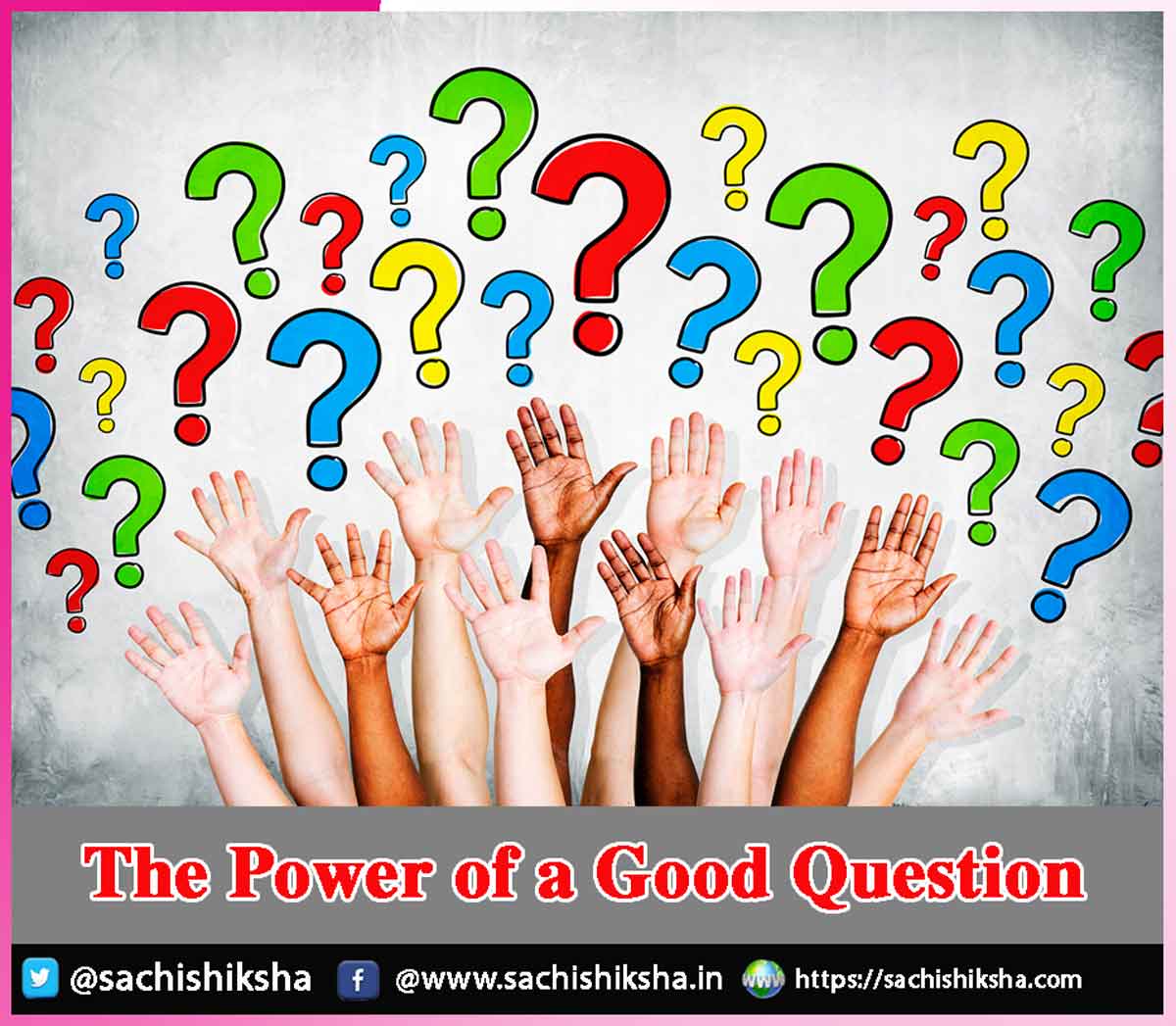
The Power of a Good Question
Introduction: In a world overflowing with information, the ability to ask the right question has become more valuable than simply knowing the right answer. Whether in academics, business, relationships, or personal growth, thoughtful questions often open doors that quick answers cannot. The quality of our questions shapes the clarity of our understanding, the depth of our conversations, and the direction of our decisions. Asking the right question is not just a communication skill; it is an art.
Table of Contents
Questions Create Possibilities
Answers provide closure, but questions create possibility. A well-framed question encourages exploration, reflection, and deeper thinking. For example, instead of asking, “Why is this failing?” one might ask, “What can be improved here?” The shift in wording transforms blame into opportunity.
 The right question helps uncover root causes rather than surface-level explanations. In professional environments, leaders who ask strategic questions often make better decisions because they gather diverse perspectives before acting. In personal life, meaningful questions strengthen relationships by promoting understanding instead of assumptions. Questions guide thinking. They influence the direction in which the mind searches for solutions.
Curiosity & Clarity
At the heart of every good question lies genuine curiosity. When curiosity drives conversation, questions become thoughtful rather than confrontational. People respond more openly when they feel heard instead of judged.
Asking clear and specific questions also reduces confusion. Vague questions often produce vague answers. For instance, asking, “How can I improve?” may lead to general advice. But asking, “What specific skill should I focus on to improve my performance in presentations?” invites actionable feedback. The art lies in being precise without being rigid and open without being scattered.
Role of Listening
Asking the right question is only half the process. Listening carefully to the response completes it. Many conversations fail not because of poor questions, but because of inattentive listening. Active listening allows follow-up questions that deepen understanding. It shows respect and signals that the conversation matters. When individuals truly listen, they gather insights that may not have been anticipated initially.
In this way, questioning becomes a continuous process of learning rather than a one-time inquiry.
Growth Through Questions
Self-questioning is equally powerful. Reflective questions such as “What did I learn from this experience?” or “What could I do differently next time?” promote personal growth. These questions encourage accountability without self-criticism.
In challenging situations, reframing questions can shift emotional responses. Instead of asking, “Why does this always happen to me?” one might ask, “What is this situation teaching me?” This subtle shift fosters resilience and problem-solving. Growth begins when we are willing to challenge our own assumptions through honest questioning.
Purpose & Empathy
Effective questioning also requires empathy. The tone and intention behind a question can determine whether it builds trust or creates defensiveness. Questions aimed at understanding rather than proving a point tend to generate more constructive dialogue.
In professional settings, thoughtful questions demonstrate leadership and strategic thinking. In education, they stimulate critical analysis. In everyday conversations, they strengthen connection.
Conclusion
The art of asking the right question lies in curiosity, clarity, empathy, and active listening. While answers may offer temporary satisfaction, questions drive progress and discovery. By learning to frame thoughtful, purposeful inquiries, we not only gain better insights but also encourage meaningful conversations.
In the end, the right question does more than seek information. It shapes understanding, inspires growth, and opens new possibilities.