























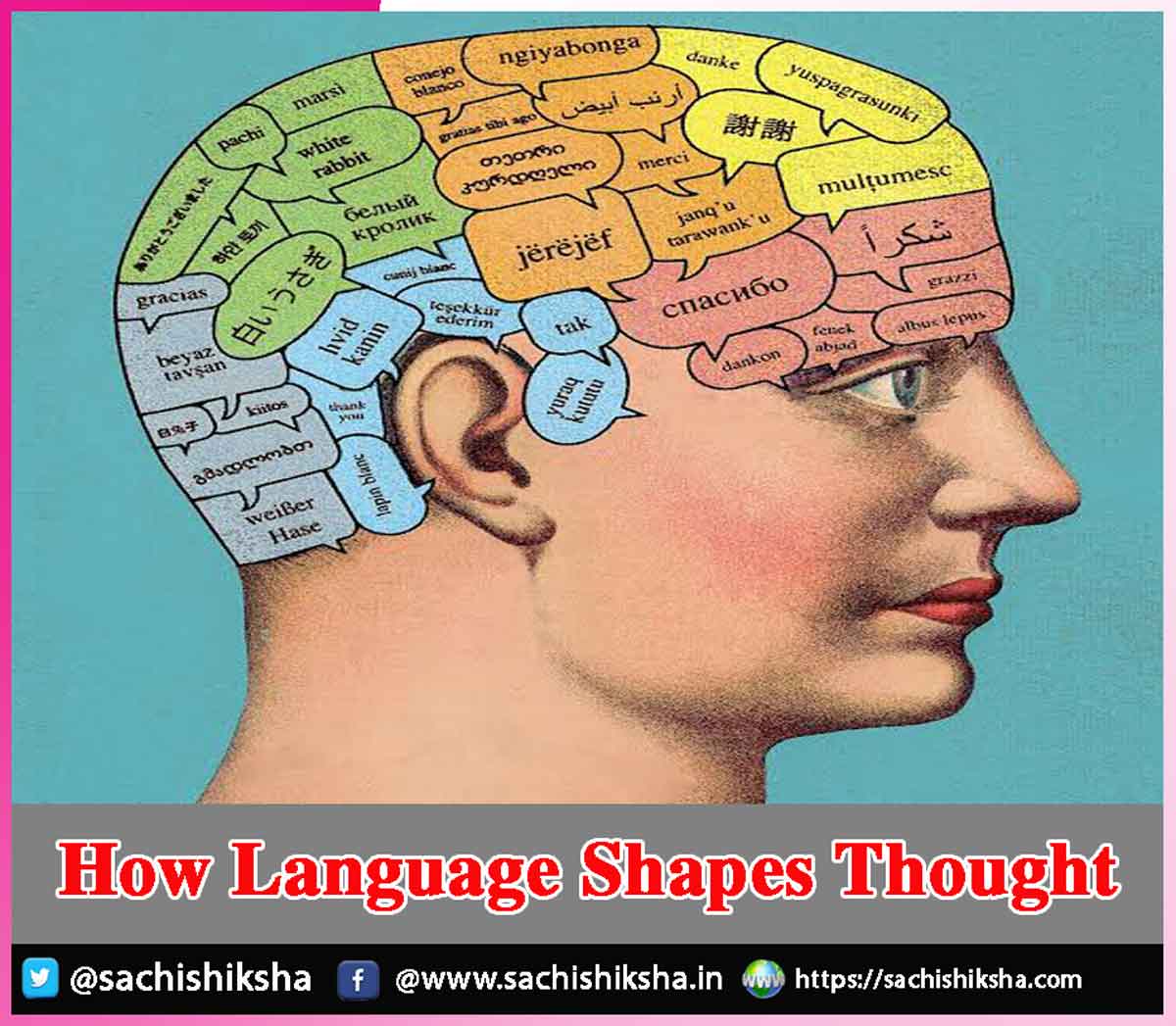
How Language Shapes Thought
Introduction: Before we say something, we usually think about it. But what if the relationship also works in the opposite direction? What if the words available to us influence what we are able to notice, understand and even feel?
Language is more than a tool for communication. It gives structure to our experiences. The words we use can influence how we describe the world, how we remember events and how we interpret what happens around us. We don’t simply use language to express our thoughts. In many ways, language helps organise those thoughts.
Table of Contents
Words Give Shape to Experience
Imagine experiencing a feeling but not having a word for it. You may know that something feels uncomfortable, but you may struggle to explain exactly what it is. Once you learn a word that describes that feeling, the experience can become easier to identify. For example, someone may feel mentally exhausted, socially withdrawn and emotionally overwhelmed without knowing how to describe it. Learning words such as “burnout,” “overstimulation” or “anxious” can give structure to an otherwise confusing experience.
The feeling existed before the word. But the word gives us a way to recognise and communicate it. This is one reason vocabulary can influence self-awareness. The more precisely we can describe an experience, the more precisely we may be able to think about it.
Different Languages, Different Perspectives
Languages don’t divide the world in exactly the same ways. Some languages have words for concepts that require an entire phrase in another language. Certain languages also use grammatical structures that draw attention to different aspects of an experience, such as time, location, relationships or responsibility.
This does not mean that speaking a particular language completely determines how someone thinks. People can understand concepts even when their language does not have a single word for them. However, language can make certain distinctions more noticeable or easier to communicate.
Think of it like a map. A map doesn’t create the landscape, but the way it is designed determines which features are easier to see.
The Words We Use About Ourselves
Language can also influence how we see ourselves. Compare saying, “I failed at this” with “I am a failure.”
The first describes an event. The second turns the event into an identity.
Similarly, saying “I made a mistake” leaves room for learning, while “I always mess things up” creates a much broader conclusion.
These statements may seem like small differences, but repeated language can reinforce patterns of thinking. The way we describe ourselves can influence what we expect from ourselves in the future. This doesn’t mean positive phrases can magically solve difficult situations. Instead, more accurate and flexible language can help us avoid turning temporary experiences into permanent identities.
Language Influences How We See Others
The same principle applies to how we describe other people.
Calling someone “lazy” creates a fixed impression. Saying they “have been struggling to stay motivated lately” leaves room for context.
Calling someone “rude” gives us a judgment. Describing what happened – “They interrupted me several times” – focuses on observable behaviour.
The difference matters because labels can become shortcuts. Once we assign a label to someone, we may begin interpreting their future behaviour through that label. Thus, language doesn’t just communicate our perception of people. It can strengthen that perception.
The Language of Everyday Life
Our daily conversations are filled with subtle examples.
“I have to do this” can feel different from “I choose to do this.”
“I can’t” sounds different from “I haven’t figured out how yet.”
“Everything is going wrong” creates a very different mental picture from “Several things haven’t gone as planned.”
The second versions don’t deny reality. They simply leave more room for possibility, context and action. This is where language becomes powerful – not because words control reality, but because they influence the mental frame through which we approach it.
Words Don’t Control Thought -But They Guide It
It would be an oversimplification to say that language determines everything we think. Human thought is far more complex than vocabulary alone. We can imagine images, emotions and ideas without always having words for them. Yet language gives those thoughts structure. It helps us categorise experiences, communicate emotions, remember events and explain our understanding of the world.
Conclusion
Perhaps that is why becoming more conscious of our language can also make us more conscious of our thinking. The words we choose may not change reality itself. But they can change what we notice, how we interpret it and what possibilities we see within it.