























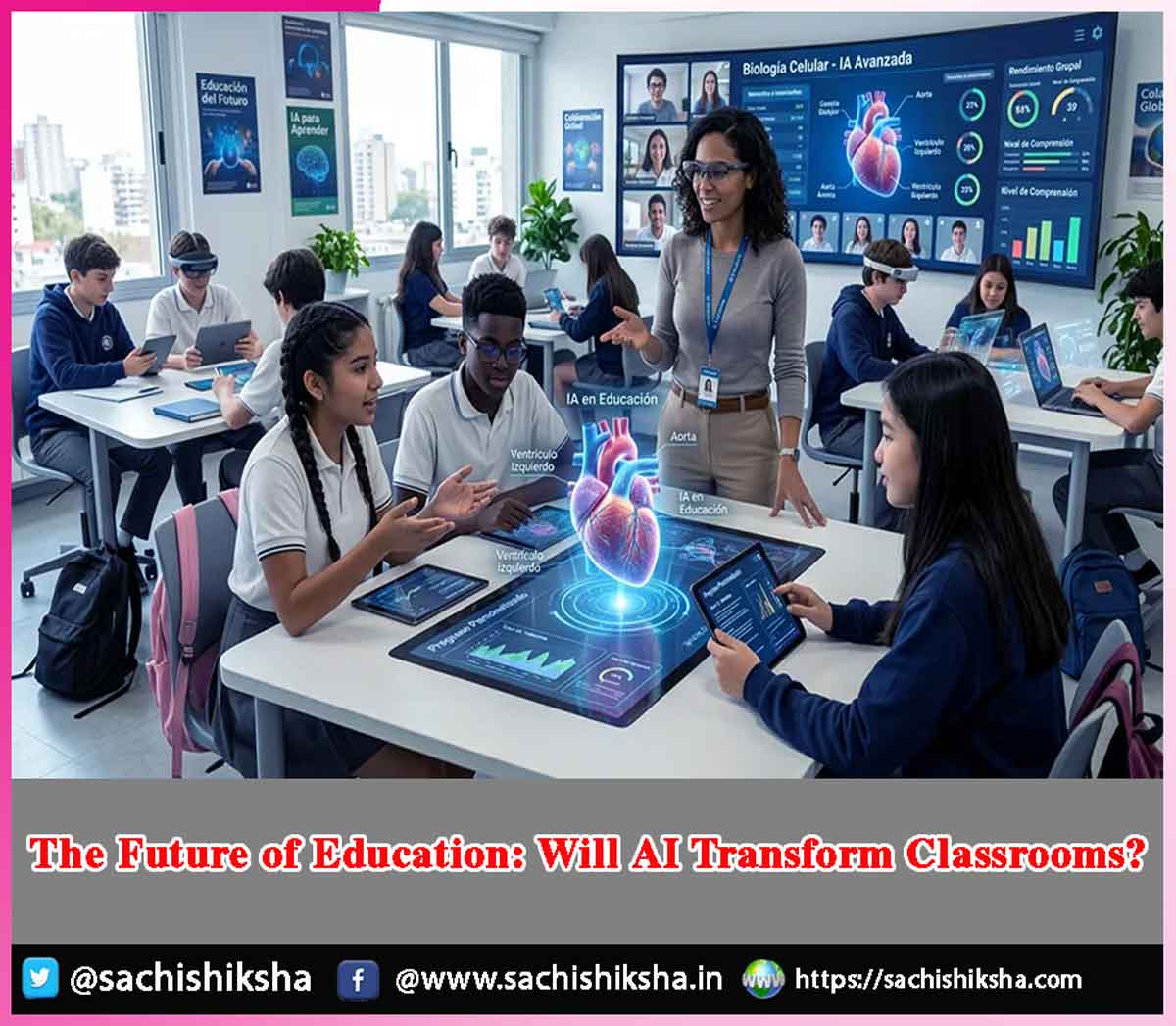
The Future of Education: Will AI Transform Classrooms?
Introduction: In one of Isaac Asimov’s short stories, The Fun They Had, children in the year 2157 learn alone at home from mechanical teachers. They miss the old schools where children sat together, learned from human teachers, and shared books. Written in 1951, the story once seemed like pure science fiction. Today, as artificial intelligence enters classrooms and learning spaces, this fictional future feels less impossible. But will education truly become a room of children facing machines?
Table of Contents
The Evolution of AI
The journey of AI started well before ChatGPT or Gemini. Ideas about artificial beings appeared in ancient myths, though AI only became a formal research field at the Dartmouth workshop in 1956. Early systems relied on fixed instructions and solved limited problems. Later, progress slowed during periods called AI winters, when funding and public interest fell. From the 2000s onward, better computers, larger datasets, and machine learning accelerated development. Deep learning propelled the field forward, while the transformer architecture introduced in 2017 made generative AI possible. Tools such as ChatGPT brought this technology within easy reach in 2022, and AI steadily made its way into learning and pedagogical arenas.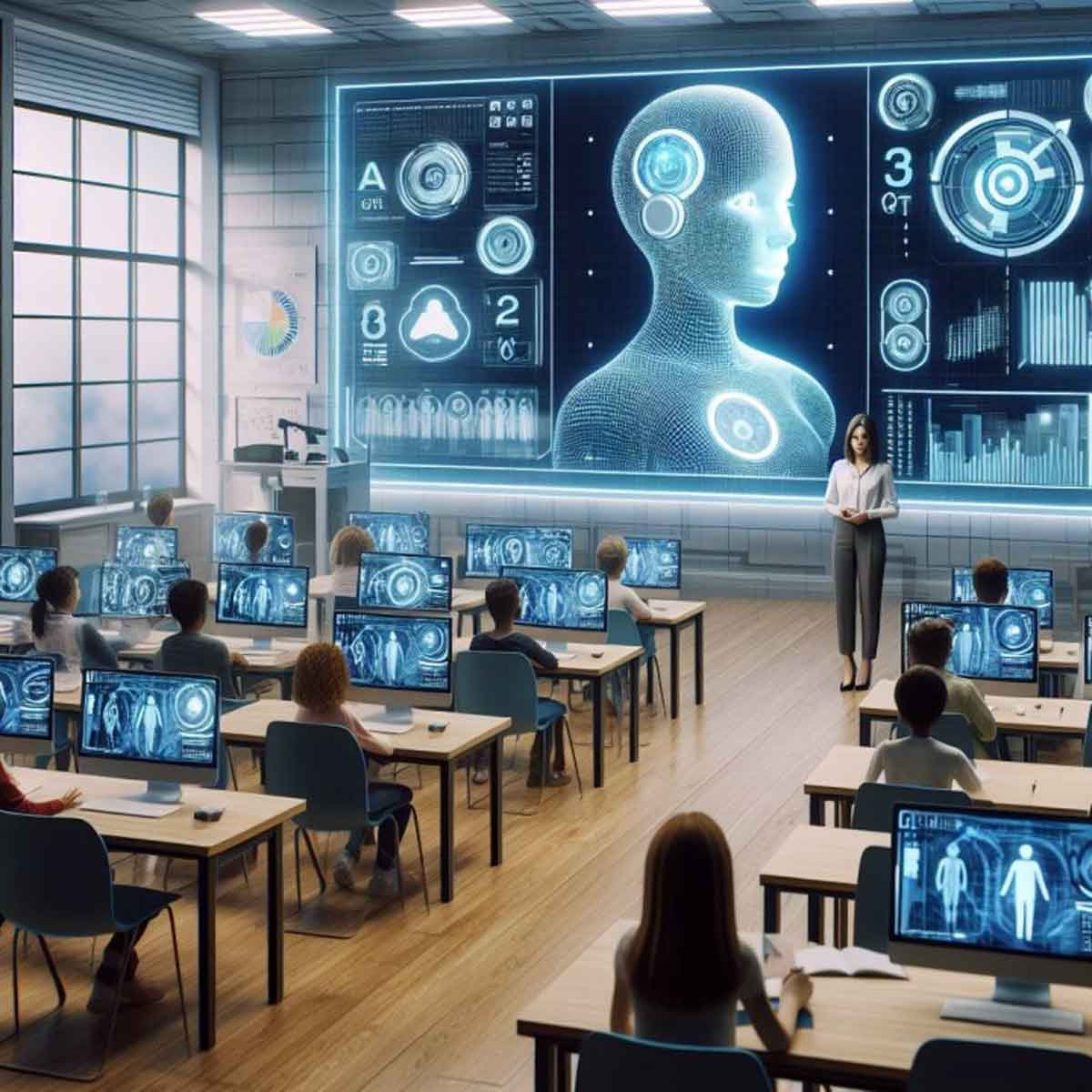
AI in Today’s Classrooms
Education is already evolving. AI can explain difficult topics in simpler words, translate lessons, promote inclusivity, create practice questions, and offer useful feedback. Adaptive platforms can adjust coursework to a learner’s individual progress, allowing a student hesitant to ask a question in class to practise privately with a digital tutor. Teachers also use AI to prepare lesson plans, adapt reading material, create assessments, and reduce administrative paperwork. According to a 2024 RAND study of American schools, 18 per cent of surveyed teachers used AI for teaching in autumn 2023, while another 15 per cent had tried it—primarily for adapting teaching materials and creating resources.
Building the Next-Generation Classroom
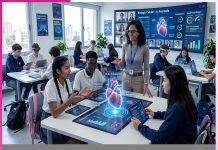
A next-generation classroom may include smart boards, virtual laboratories, robotics spaces, and AI labs where students build and test ideas. These facilities can make science more practical and help students understand emerging technology. Yet, a smart classroom is not simply a room filled with screens. It requires trained teachers, reliable electricity, internet access, suitable devices, and clear governance. Furthermore, the data centres powering AI require substantial electricity and water; their environmental cost must be weighed alongside innovation.
Risks and Limitations
The risks are equally noteworthy. AI can produce convincing but factually incorrect answers and repeat biases found in its training data if systems are poorly managed. Students may become overly dependent on instant answers, losing the patience needed to read, question, calculate, and think independently. Meaningful learning also involves friendship, healthy disagreement, confidence, and empathy. A chatbot can respond to a child, but it cannot replace a teacher’s care and judgement. Therefore, AI in education must remain human-centred, fair, safe, and inclusive.
The Danger of the Digital Divide
The greatest danger is unequal access. Well-funded schools may gain advanced tools, while rural and low-income schools continue to struggle with basic connectivity. Moreover, systems trained mainly on dominant cultures may fail to reflect local knowledge and languages. Without affordable access, comprehensive teacher training, strict data protection, and transparent rules, AI could widen existing inequalities instead of reducing them.
A Human-Centred Future
AI will certainly transform classrooms, but it should not decide what education means. Learning is not merely about producing quick answers; it is about developing curious minds and thoughtful, responsible people. Teachers must remain guides, while students learn to question AI rather than blindly obey it. Just as in Asimov’s story, technology may change the classroom beyond recognition. The ultimate choice is whether it becomes a place of isolation or a richer, more inclusive space for human learning.